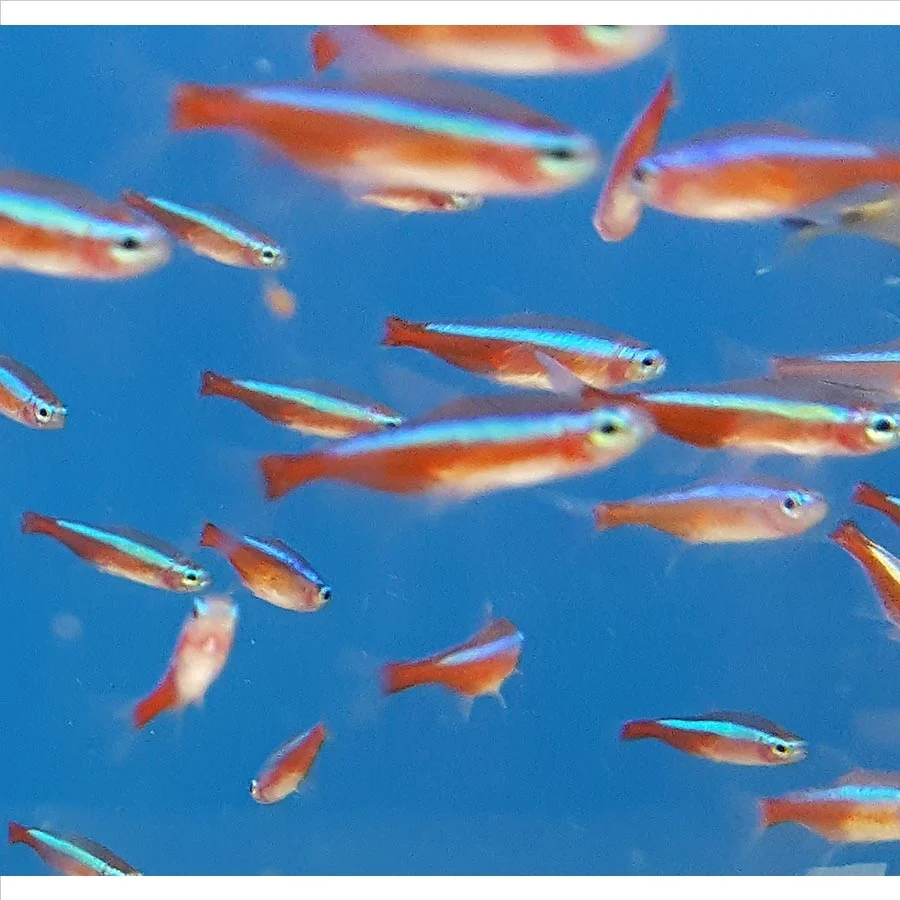

Lipstick Tang - (No Online Purchases)
Description
The Lipstick tang is one of the most beautiful and sought-after surgeonfish in the hobby, but it's also known for being challenging to keep due to its susceptibility to disease and aggressive temperament.
Here's a comprehensive care guide for the Powder Blue Tang (Acanthurus leucosternon):
Appearance:
- Vibrant Blue Body: The primary body colour is a stunning, electric blue. The intensity of this blue is often an indicator of the fish's health and stress levels.
- Black Head: The head is a striking black, providing a sharp contrast to the blue body.
- White "Lipstick" and Chest: A broad white band runs from the base of the pectoral fin to the throat, giving it the "lipstick" or "powder blue" appearance. The mouth area is also typically white.
- Yellow Dorsal Fin: The dorsal fin is a vivid yellow.
- White Anal and Pelvic Fins: These fins are usually white.
- Caudal Spine: Like all surgeonfish, it possesses a sharp, scalpel-like spine on each side of its caudal peduncle (tail base), which it uses for defence.
Natural Habitat and Distribution:
- Found in the from East Africa to the Andaman Sea, southwest Indonesia, and Christmas Island.
- Inhabits shallow, clear coastal coral reefs, preferring reef flats and upper seaward slopes.
- Primarily grazes on benthic algae in the wild.
Aquarium Care (Expert Level):
- Minimum Tank Size: Due to their active swimming nature, potential adult size, and territoriality, a minimum of 125 gallons (approximately 473 liters) is recommended for a single Powder Blue Tang. Many experienced aquarists advocate for 180 gallons or more to truly allow them to thrive and reduce stress, especially in a community tank.
- Adult Size: They typically reach an adult size of 7.5 to 9 inches (19 to 23 cm) in captivity. Some can grow larger, up to 10 inches or more.
- Water Parameters: Maintaining pristine and highly stable water quality is paramount for this species. They are very sensitive to fluctuations.
- Temperature: 72-78°F (22-26°C)
- Salinity: 1.020-1.025 specific gravity
- pH: 8.1-8.4
- Alkalinity: 8-12 dKH
- Ammonia and nitrites must be 0 ppm. Nitrates should be kept as low as possible, ideally below 10 ppm.
- Filtration: A robust filtration system, including a strong protein skimmer, is essential to handle their bio-load and maintain water quality.
- Water Flow: They require strong and turbulent water flow to mimic their natural reef environment. Powerheads and wavemakers are highly recommended.
- Diet:
- They are herbivores, constantly grazing on algae in the wild.
- Provide a diet rich in marine-based algae and seaweed. Offer dried seaweed (nori) tied to a rock or using a veggie clip several times a week (at least 3-4 times).
- Supplement with high-quality algae-based pellets and flakes, Spirulina, and other vegetable matter (e.g., blanched zucchini).
- While they will accept meaty foods like mysis shrimp or brine shrimp, these should only be offered occasionally as a treat and should not form the bulk of their diet.
- Frequent small feedings (3-4 times a day) are better than one large feeding to support their fast metabolism and grazing habits.
- Temperament:
- Highly aggressive and territorial, especially towards other tangs (surgeonfish), particularly those of similar shape or coloration (e.g., other Acanthurus species like Clown Tangs, Powder Brown Tangs).
- It is generally recommended to keep only one Powder Blue Tang per tank. If attempting to keep multiple tangs in a very large system, they should be introduced simultaneously and ideally be of different genera and body shapes.
- They are generally peaceful towards other non-tang species.
- Reef Compatibility: Reef safe. They will not harm corals or most invertebrates, making them a suitable addition to a mixed reef tank, provided their other needs (tank size, aggression) are met. They will help control nuisance algae.
- Tank Setup:
- Provide plenty of live rock to allow for natural grazing and offer hiding places.
- Ensure ample open swimming areas in the water column.
- A well-established aquarium (at least 6 months to a year old) with stable water parameters is crucial before introducing this fish.
- Disease Susceptibility: Powder Blue Tangs are notoriously prone to marine ich (Cryptocaryon irritans) and other parasitic infections when stressed or in poor water quality. They lack a thick slime coat, making them more vulnerable.
- Acclimation: Proper and slow acclimation (drip acclimation) is absolutely essential due to their sensitivity to changes in water chemistry.
Description
The Lipstick tang is one of the most beautiful and sought-after surgeonfish in the hobby, but it's also known for being challenging to keep due to its susceptibility to disease and aggressive temperament.
Here's a comprehensive care guide for the Powder Blue Tang (Acanthurus leucosternon):
Appearance:
- Vibrant Blue Body: The primary body colour is a stunning, electric blue. The intensity of this blue is often an indicator of the fish's health and stress levels.
- Black Head: The head is a striking black, providing a sharp contrast to the blue body.
- White "Lipstick" and Chest: A broad white band runs from the base of the pectoral fin to the throat, giving it the "lipstick" or "powder blue" appearance. The mouth area is also typically white.
- Yellow Dorsal Fin: The dorsal fin is a vivid yellow.
- White Anal and Pelvic Fins: These fins are usually white.
- Caudal Spine: Like all surgeonfish, it possesses a sharp, scalpel-like spine on each side of its caudal peduncle (tail base), which it uses for defence.
Natural Habitat and Distribution:
- Found in the from East Africa to the Andaman Sea, southwest Indonesia, and Christmas Island.
- Inhabits shallow, clear coastal coral reefs, preferring reef flats and upper seaward slopes.
- Primarily grazes on benthic algae in the wild.
Aquarium Care (Expert Level):
- Minimum Tank Size: Due to their active swimming nature, potential adult size, and territoriality, a minimum of 125 gallons (approximately 473 liters) is recommended for a single Powder Blue Tang. Many experienced aquarists advocate for 180 gallons or more to truly allow them to thrive and reduce stress, especially in a community tank.
- Adult Size: They typically reach an adult size of 7.5 to 9 inches (19 to 23 cm) in captivity. Some can grow larger, up to 10 inches or more.
- Water Parameters: Maintaining pristine and highly stable water quality is paramount for this species. They are very sensitive to fluctuations.
- Temperature: 72-78°F (22-26°C)
- Salinity: 1.020-1.025 specific gravity
- pH: 8.1-8.4
- Alkalinity: 8-12 dKH
- Ammonia and nitrites must be 0 ppm. Nitrates should be kept as low as possible, ideally below 10 ppm.
- Filtration: A robust filtration system, including a strong protein skimmer, is essential to handle their bio-load and maintain water quality.
- Water Flow: They require strong and turbulent water flow to mimic their natural reef environment. Powerheads and wavemakers are highly recommended.
- Diet:
- They are herbivores, constantly grazing on algae in the wild.
- Provide a diet rich in marine-based algae and seaweed. Offer dried seaweed (nori) tied to a rock or using a veggie clip several times a week (at least 3-4 times).
- Supplement with high-quality algae-based pellets and flakes, Spirulina, and other vegetable matter (e.g., blanched zucchini).
- While they will accept meaty foods like mysis shrimp or brine shrimp, these should only be offered occasionally as a treat and should not form the bulk of their diet.
- Frequent small feedings (3-4 times a day) are better than one large feeding to support their fast metabolism and grazing habits.
- Temperament:
- Highly aggressive and territorial, especially towards other tangs (surgeonfish), particularly those of similar shape or coloration (e.g., other Acanthurus species like Clown Tangs, Powder Brown Tangs).
- It is generally recommended to keep only one Powder Blue Tang per tank. If attempting to keep multiple tangs in a very large system, they should be introduced simultaneously and ideally be of different genera and body shapes.
- They are generally peaceful towards other non-tang species.
- Reef Compatibility: Reef safe. They will not harm corals or most invertebrates, making them a suitable addition to a mixed reef tank, provided their other needs (tank size, aggression) are met. They will help control nuisance algae.
- Tank Setup:
- Provide plenty of live rock to allow for natural grazing and offer hiding places.
- Ensure ample open swimming areas in the water column.
- A well-established aquarium (at least 6 months to a year old) with stable water parameters is crucial before introducing this fish.
- Disease Susceptibility: Powder Blue Tangs are notoriously prone to marine ich (Cryptocaryon irritans) and other parasitic infections when stressed or in poor water quality. They lack a thick slime coat, making them more vulnerable.
- Acclimation: Proper and slow acclimation (drip acclimation) is absolutely essential due to their sensitivity to changes in water chemistry.
Original: $102.49
-70%$102.49
$30.75Description
Description
The Lipstick tang is one of the most beautiful and sought-after surgeonfish in the hobby, but it's also known for being challenging to keep due to its susceptibility to disease and aggressive temperament.
Here's a comprehensive care guide for the Powder Blue Tang (Acanthurus leucosternon):
Appearance:
- Vibrant Blue Body: The primary body colour is a stunning, electric blue. The intensity of this blue is often an indicator of the fish's health and stress levels.
- Black Head: The head is a striking black, providing a sharp contrast to the blue body.
- White "Lipstick" and Chest: A broad white band runs from the base of the pectoral fin to the throat, giving it the "lipstick" or "powder blue" appearance. The mouth area is also typically white.
- Yellow Dorsal Fin: The dorsal fin is a vivid yellow.
- White Anal and Pelvic Fins: These fins are usually white.
- Caudal Spine: Like all surgeonfish, it possesses a sharp, scalpel-like spine on each side of its caudal peduncle (tail base), which it uses for defence.
Natural Habitat and Distribution:
- Found in the from East Africa to the Andaman Sea, southwest Indonesia, and Christmas Island.
- Inhabits shallow, clear coastal coral reefs, preferring reef flats and upper seaward slopes.
- Primarily grazes on benthic algae in the wild.
Aquarium Care (Expert Level):
- Minimum Tank Size: Due to their active swimming nature, potential adult size, and territoriality, a minimum of 125 gallons (approximately 473 liters) is recommended for a single Powder Blue Tang. Many experienced aquarists advocate for 180 gallons or more to truly allow them to thrive and reduce stress, especially in a community tank.
- Adult Size: They typically reach an adult size of 7.5 to 9 inches (19 to 23 cm) in captivity. Some can grow larger, up to 10 inches or more.
- Water Parameters: Maintaining pristine and highly stable water quality is paramount for this species. They are very sensitive to fluctuations.
- Temperature: 72-78°F (22-26°C)
- Salinity: 1.020-1.025 specific gravity
- pH: 8.1-8.4
- Alkalinity: 8-12 dKH
- Ammonia and nitrites must be 0 ppm. Nitrates should be kept as low as possible, ideally below 10 ppm.
- Filtration: A robust filtration system, including a strong protein skimmer, is essential to handle their bio-load and maintain water quality.
- Water Flow: They require strong and turbulent water flow to mimic their natural reef environment. Powerheads and wavemakers are highly recommended.
- Diet:
- They are herbivores, constantly grazing on algae in the wild.
- Provide a diet rich in marine-based algae and seaweed. Offer dried seaweed (nori) tied to a rock or using a veggie clip several times a week (at least 3-4 times).
- Supplement with high-quality algae-based pellets and flakes, Spirulina, and other vegetable matter (e.g., blanched zucchini).
- While they will accept meaty foods like mysis shrimp or brine shrimp, these should only be offered occasionally as a treat and should not form the bulk of their diet.
- Frequent small feedings (3-4 times a day) are better than one large feeding to support their fast metabolism and grazing habits.
- Temperament:
- Highly aggressive and territorial, especially towards other tangs (surgeonfish), particularly those of similar shape or coloration (e.g., other Acanthurus species like Clown Tangs, Powder Brown Tangs).
- It is generally recommended to keep only one Powder Blue Tang per tank. If attempting to keep multiple tangs in a very large system, they should be introduced simultaneously and ideally be of different genera and body shapes.
- They are generally peaceful towards other non-tang species.
- Reef Compatibility: Reef safe. They will not harm corals or most invertebrates, making them a suitable addition to a mixed reef tank, provided their other needs (tank size, aggression) are met. They will help control nuisance algae.
- Tank Setup:
- Provide plenty of live rock to allow for natural grazing and offer hiding places.
- Ensure ample open swimming areas in the water column.
- A well-established aquarium (at least 6 months to a year old) with stable water parameters is crucial before introducing this fish.
- Disease Susceptibility: Powder Blue Tangs are notoriously prone to marine ich (Cryptocaryon irritans) and other parasitic infections when stressed or in poor water quality. They lack a thick slime coat, making them more vulnerable.
- Acclimation: Proper and slow acclimation (drip acclimation) is absolutely essential due to their sensitivity to changes in water chemistry.